
AI in online gambling: regulators draw lines between engagement and protection



The rules around artificial intelligence in online gambling took clearer shape on several fronts between 2025 and 2026, even though no regulator has banned personalisation outright. The EU AI Act's bans on harmful manipulation have applied since 2 February 2025, the Dutch regulator has said it will issue guidelines on AI and automated monitoring in 2026, and in Great Britain operators have been required since 2022 to use automated processes to act on signs of harm. The same technology that tailors a lobby is increasingly expected to protect the player looking at it.
This piece sets out what operators use AI for, which rules now apply, what research says about harm-detection models, and what is still unsettled. It relies on regulator texts, one expert-interview study, one peer-reviewed prediction study and the published pages of named companies.
One technology, two jobs
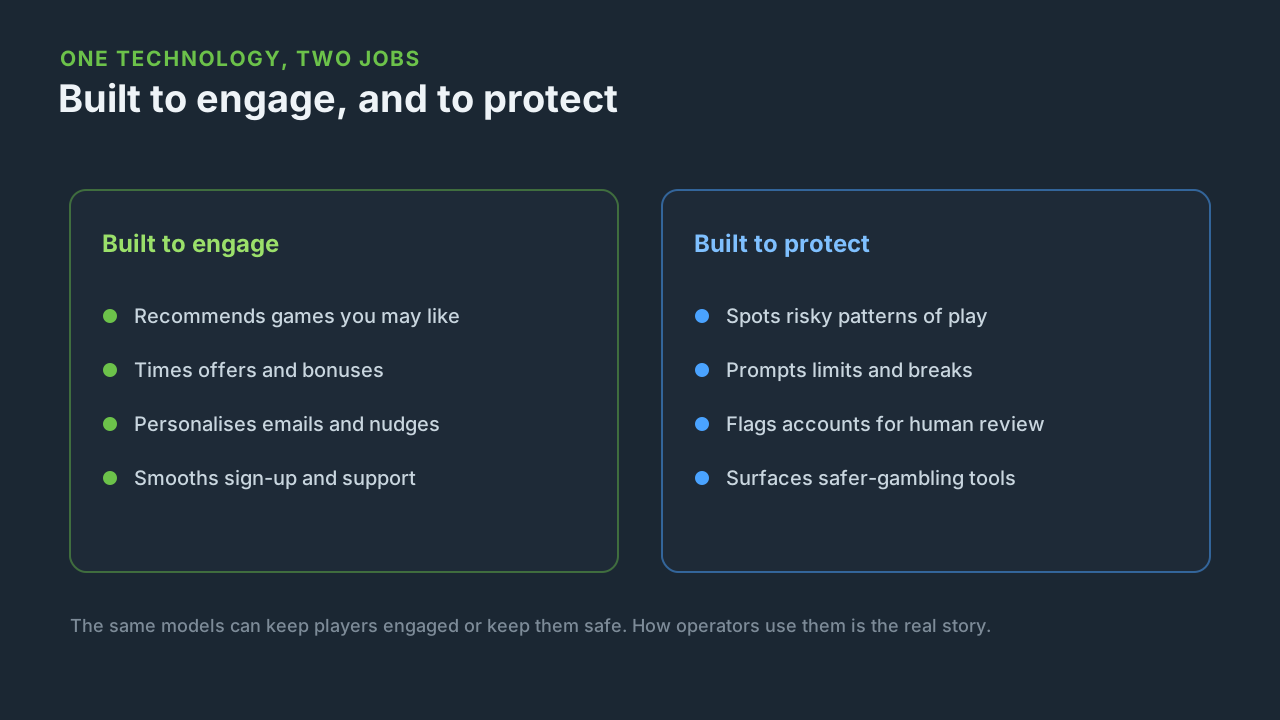
In online gambling, AI is used for two broad purposes. The first is engagement: ranking games in a lobby, choosing which offer to show and when, and running support chat. The second is protection: spotting patterns linked to harm, such as rising deposits or chasing losses, and prompting an intervention. The data behind both is largely the same account history.
A study published in the Journal of Gambling Studies (volume 42, March 2026) by Binesh, Ponnada and Syah interviewed 41 industry professionals in two rounds, in 2021 and 2023. The authors describe a shift from experimental use of AI towards personalised interactions and predictive analytics, and list regulatory gaps, algorithmic bias and responsible gambling concerns among the main challenges.
How the personalisation loop works, and where UK rules cut into it
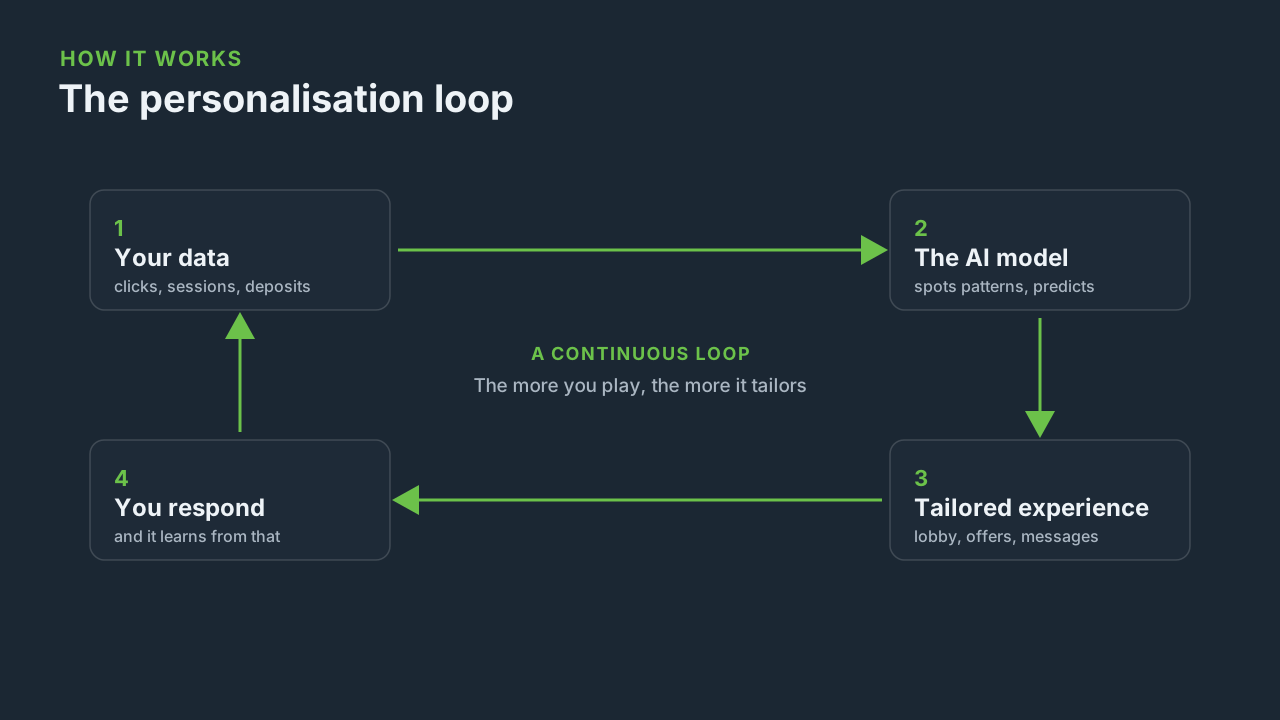
Personalisation is a feedback loop: behaviour feeds a model, the model changes what the player sees, and the player's response becomes new data. In Great Britain, two sets of rules act directly on the offer side of that loop. From 1 May 2025, online operators must let customers opt in to direct marketing by product (betting, casino, bingo) and by channel, with opt-out as the default.
From 19 January 2026, bonuses may carry wagering requirements of no more than 10 times, and promotions that mix products, such as betting and slots in one offer, are banned. However sophisticated the targeting, the offer it can deliver is now narrower.
Great Britain already requires automated harm detection
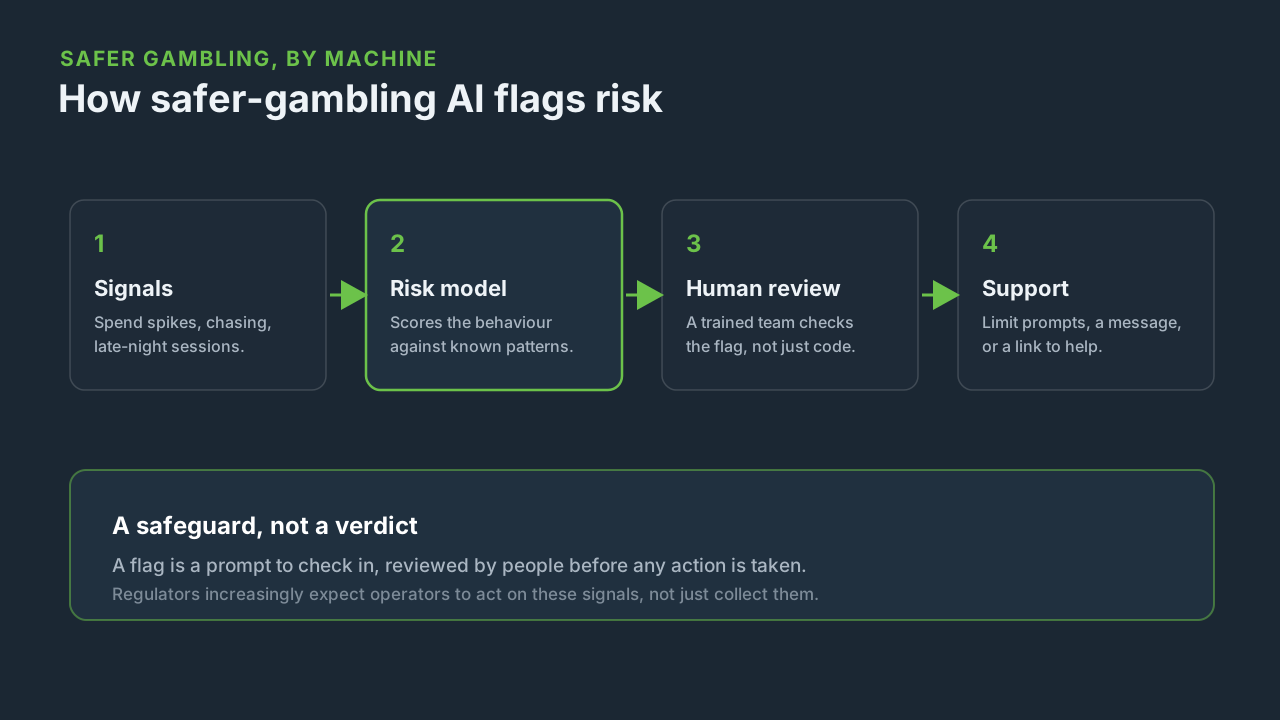
On the protection side, the UK rules go further than many players realise. Under social responsibility code 3.4.3, which applied in stages from 12 September 2022, remote operators must flag indicators of harm in a timely manner and act on strong indicators by implementing automated processes. Where strong indicators are identified, they must prevent marketing and the take-up of new bonus offers.
The same code builds human oversight into any automated step: operators must manually review how the process worked in each customer's case and give customers "the opportunity to contest any automated decision which affects them".
On 5 January 2026 the Commission published its own approach to AI. It names understanding and, where appropriate, regulating the industry's use of AI as a priority, and says its own use will be lawful, transparent and subject to human oversight. It has not published AI-specific rules for operators.
The Netherlands: chatbots allowed, humans required
The Dutch regulator, the Kansspelautoriteit (KSA), wrote to licensed online operators in May 2025 about chatbots and AI. As reported by the trade site CasinoNieuws, the letter said AI may support routine customer service but cannot replace trained staff in addiction prevention, and that operators remain responsible for systems they buy in and must be able to explain how they reach conclusions.
KSA chair Michel Groothuizen said on 16 January 2026 that the regulator would issue guidelines on the use of AI and automated monitoring tools later in the year, and the KSA's 2026 supervision agenda lists that guidance under its duty-of-care work.
The EU AI Act timetable after the July 2026 omnibus
The EU AI Act entered into force on 1 August 2024 and applies in stages. Its prohibitions, which include harmful AI-based manipulation and harmful exploitation of vulnerabilities, have applied since 2 February 2025. The AI Omnibus, which entered into force on 27 July 2026, moved the start of rules for stand-alone high-risk systems to 2 December 2027.
| EU AI Act milestone | Date |
|---|---|
| Entry into force | 1 August 2024 |
| Prohibited practices and AI literacy duties apply | 2 February 2025 |
| General-purpose AI model obligations apply | 2 August 2025 |
| General application of the Act | 2 August 2026 |
| Stand-alone high-risk systems (Annex III), after the omnibus | 2 December 2027 |
| High-risk AI embedded in regulated products (Annex I) | 2 August 2028 |
The Act does not name gambling. Whether a particular casino recommender or bonus engine could fall under the manipulation or vulnerability bans is a legal question that, as far as we could find, no regulator or court has yet tested.
Does harm-detection AI work?
The evidence is promising but limited. In a study in the Journal of Gambling Studies, Michael Auer and Mark Griffiths trained models on the account data of 945 players at one European online casino to predict self-reported problem gambling. The best model, a random forest, reached an AUC of 0.729 on test data. The authors list clear limits: one operator, a short observation window, and self-reported answers.
Operators and suppliers publish less detail. Entain describes its ARC programme as using AI to learn from and identify risks in player behaviour, and Mindway AI said in March 2023 that its GameScanner tool is part of ARC. SOFTSWISS said in October 2025 that it uses a machine-learning risk scoring tool and handled 16,000 responsible gambling cases in the first half of 2025. None of these companies has published independent evaluations on those pages.
What is confirmed and what is not yet known
- Confirmed: UK operators must use automated processes on strong indicators of harm, with manual review and a right to contest; AI Act prohibitions have applied since 2 February 2025; the KSA expects human staff in addiction prevention.
- Not yet known: the content of the KSA's promised AI guidelines, which we had not found published at the time of writing; whether any gambling system will be treated as a prohibited or high-risk practice under the AI Act.
- Unclear: how widely operators use AI for personalisation and how well their harm models perform; published figures come mostly from the companies themselves.
What it means for players
Personalisation changes what you are shown, not how a game pays: a slot's return to player is set by its design, as our RTP and volatility guide explains. In Great Britain you can choose which products and channels you get marketing for, and bonus terms are capped. If an operator contacts you about your play, it may have come from an automated flag, and UK rules entitle you to a human review. Deposit limits, time-outs and self-exclusion remain the controls you set yourself; see our responsible gambling guide.
Frequently asked questions
Can an online casino change a game's odds for me personally?
Personalisation affects which games and offers you see. A game's return to player comes from its design and certification, not from where it sits in your lobby.
Do UK casinos have to use automated systems to spot harm?
Yes. Since 2022, remote operators in Great Britain must act on strong indicators of harm using automated processes, review each case manually and let customers contest automated decisions.
Can I stop personalised casino marketing in the UK?
Yes. Since 1 May 2025 online operators must offer opt-in choices by product and by channel, with marketing switched off by default.
Does the EU AI Act ban casino recommendation engines?
Not by name. It bans harmful manipulation and exploitation of vulnerabilities from 2 February 2025, but whether a specific gambling system falls under those bans has not been tested.
Can a chatbot handle my request to raise a deposit limit in the Netherlands?
According to the KSA's May 2025 letter as reported by CasinoNieuws, trained addiction-prevention staff must engage personally with players asking to raise limits above maximum thresholds.
How accurate are AI models at spotting problem gambling?
One peer-reviewed study of 945 players at a single operator reported an AUC of 0.729 against self-reported problem gambling. That is useful but far from certain, and results may not transfer to other operators.
Sources
- European Commission - AI Act regulatory framework
- European Commission - AI Omnibus enters into force (27 Jul 2026)
- UK Gambling Commission - The Commission's approach to Artificial Intelligence (5 Jan 2026)
- UK Gambling Commission - LCCP 3.4.3 Remote customer interaction
- UK Gambling Commission - New rules on action for at-risk customers (14 Apr 2022)
- UK Gambling Commission - New rules boosting safety and consumer choice (1 May 2024)
- UK Gambling Commission - LCCP 5.1.12 Direct marketing preferences
- UK Gambling Commission - Gambling promotions to be safer and simpler (26 Mar 2025)
- Kansspelautoriteit - Speech Michel Groothuizen (16 Jan 2026)
- Kansspelautoriteit - Toezichtagenda 2026
- CasinoNieuws - KSA letter on chatbots and AI (13 May 2025)
- Binesh, Ponnada and Syah - The Future of the Gambling Industry is AI, Journal of Gambling Studies (Mar 2026)
- Auer and Griffiths - Predicting self-reported problem gambling with account data, Journal of Gambling Studies
- Entain - Protecting players with ARC (2021)
- Mindway AI - GameScanner and Entain ARC (15 Mar 2023)
- Yogonet - SOFTSWISS machine learning for responsible gambling (8 Oct 2025)
Go deeper

Why personalisation never touches the certified maths behind the games.
Read guide →
Judge any promoted game on its real value, not its placement.
Read guide →
The limits and tools that outweigh any algorithm, plus where to get help.
Read guide →