
A model called Elasticity: what the NYT reports DraftKings did with bonuses



The New York Times reported on 19 September 2026 that DraftKings built a machine-learning model, known internally as Elasticity, which scored customers according to how much they would lose for each promotion offered to them. The company rejects any implication that its marketing is unfair and says promotions go to engaged customers rather than losing ones. Massachusetts' regulator has since said it will look at how operators in the state use AI. We have not seen the Times reporting behind its paywall, and nothing here has been tested by a regulator or a court.
What the reporting says
The investigation is based on interviews with more than 40 former employees and on internal documents. Its central claim is that a model built in 2023 ranked customers by their likely response to promotional offers such as bonus bets, and that the score was used to decide who received them. According to the reporting, a former analyst, Jayden Butts, ran a test on the model and found that the customers it rated as the most valuable to target were problem gamblers. DraftKings describes that test as preliminary and inconclusive.
| Claim | What the reporting says | Status |
|---|---|---|
| A model called Elasticity existed | Built in 2023, scoring response to promotions | Reported; not denied in the quoted response |
| It scored customers by likely losses | Central finding of the investigation | Disputed by DraftKings |
| Its top targets were problem gamblers | A test by a former analyst | Called preliminary and inconclusive by DraftKings |
| A protection model was shelved | Begun in 2024, presentation cancelled | Reported; the company gives a reason rather than a denial |
| Any rule was broken | No regulator or court finding | Not established |
The model that was not built
The part of the account that goes furthest is not about promotions at all. The reporting says a data scientist, Nestor Hernandez, started building a predictive system in 2024 to identify customers at risk of harm, using the same behavioural data that fed the promotional scoring. A presentation of that work was cancelled on the day it was scheduled and the project was stopped; two later attempts at something similar were also shelved.
DraftKings does not dispute that the work ended. Its chief responsible gaming officer, Lori Kalani, is quoted saying the company took a "collective decision" not to use predictive technology for problem gambling because it "wasn't evidence-based". That is a defensible position in itself. It is also the reason the story has travelled: the same data was considered good enough to decide who got a bonus, and not good enough to decide who needed help.
What DraftKings says
The company's position, quoted in the coverage, is direct: "Promotions are directed toward customers who demonstrate sustained, engaged use of our platform, not toward customers based on their losses." It rejects any implication that its marketing practices are unfair, and it characterises the analyst's test as preliminary and inconclusive. No regulator has made a finding against it, and no court has considered the allegations.
The regulator that started asking
On 24 September the Massachusetts Gaming Commission said it would look at how licensed sports betting operators in the state use artificial intelligence and machine learning, beginning with DraftKings but covering all of them. The chair, Jordan Maynard, said he had "requested that Executive Director Dean Serpa and the team engage with the operator to understand the specifics that were reported", adding that "any further action or policy making can then be determined by the commission when and if appropriate". A commissioner, Paul Brodeur, noted that Massachusetts is "one of the only states, if not the only state, to reference AI in regulation".
That is a request for information rather than an enforcement action, and it is worth describing as such. Outside the United States the response has so far been argument rather than regulation: the Electronic Frontier Foundation used the story to argue that behavioural advertising should be banned outright. None of the European regulators whose markets we cover had commented by 5 October 2026.
What is confirmed and what is not yet known
- Confirmed: the Times published the investigation on 19 September 2026, based on more than 40 former employees and internal documents; DraftKings has issued the denial quoted above; its chief responsible gaming officer has said the company decided against predictive problem-gambling tools; the Massachusetts Gaming Commission said on 24 September that it would examine operators' use of AI, starting with DraftKings.
- Not known: what the model actually weighed, since the documents are not public; whether the analyst's test would hold up, which the company disputes; whether any rule was broken, on which no regulator or court has ruled; what Massachusetts will conclude or when; and whether any regulator outside the United States will take an interest.
What it means for players
Strip out the American detail and a plainer point remains: a promotional offer is a commercial decision about you, taken on what the operator knows about how you play. That is not a scandal in itself, and it is how most online marketing works. What the story puts a name to is the difference between a bonus aimed at a customer who is enjoying themselves and one aimed at a customer who is not, and the fact that the data cannot tell the two apart unless somebody asks it to.
For a player the useful response is unglamorous. Read what a bonus actually requires before taking it, because the requirement is where the value sits or vanishes: our guide to welcome bonuses sets out what to look for, and in Britain the rules already cap bonus wagering and require terms to be clear and fair, which is covered on our UK page. Treat an offer that arrives just after a losing session as information about the operator's marketing rather than a reward, and set your own deposit and time limits in advance rather than after a prompt. If gambling has stopped being fun, the self-exclusion and limit tools exist and work.
Frequently asked questions
What did the New York Times report about DraftKings?
That the company built a machine-learning model in 2023, known internally as Elasticity, which scored customers on how much they would lose for each promotion offered, and that the score was used to decide who received offers such as bonus bets. The reporting is based on more than 40 former employees and internal documents.
What is the Elasticity model?
According to the reporting, an internal model that ranked customers by their likely response to promotions. The documents behind the description are not public, so what it actually weighed is not independently known.
What does DraftKings say?
That "promotions are directed toward customers who demonstrate sustained, engaged use of our platform, not toward customers based on their losses". It rejects any implication that its marketing practices are unfair and calls a former analyst's test of the model preliminary and inconclusive.
Did DraftKings build a tool to spot problem gambling?
The reporting says a data scientist began one in 2024 using the same behavioural data, that the presentation was cancelled on the day it was scheduled and the project stopped, and that two later attempts were shelved. The company's chief responsible gaming officer says it made a collective decision not to use predictive technology for problem gambling because it was not evidence-based.
Has a regulator acted?
Not yet. On 24 September 2026 the Massachusetts Gaming Commission said it would examine how licensed operators in the state use AI and machine learning, starting with DraftKings. That is a request for information rather than an enforcement action, and no regulator or court has made any finding.
Does this affect players in the UK or Europe?
DraftKings' US sportsbook is not the product European players use, and no European regulator had commented by 5 October 2026. The underlying question, how operators use behavioural data to aim promotions, applies anywhere. British rules already cap bonus wagering and require terms to be clear and fair.
How can I tell if a bonus is aimed at me?
You usually cannot, and that is the point. What you can do is judge the offer on its terms rather than its timing: check the wagering requirement, the time limit and the game weighting before accepting, and be wary of treating an offer that follows a losing session as a reward.
Sources
- The New York Times - DraftKings and AI-driven promotions (19 September 2026, paywalled; not opened by us)
- The New York Times - Massachusetts' regulator to examine operators' use of AI (24 September 2026, paywalled; not opened by us)
- Forbes, Roger Dooley - DraftKings and dark patterns: when personalisation hurts the customer (29 September 2026)
- Legal Sports Report - Massachusetts regulators to review operator AI use after the DraftKings report (24 September 2026)
- Electronic Frontier Foundation - DraftKings is using AI to supercharge the harms of online behavioural advertising (24 September 2026)
- Massachusetts Gaming Commission - official site
Go deeper
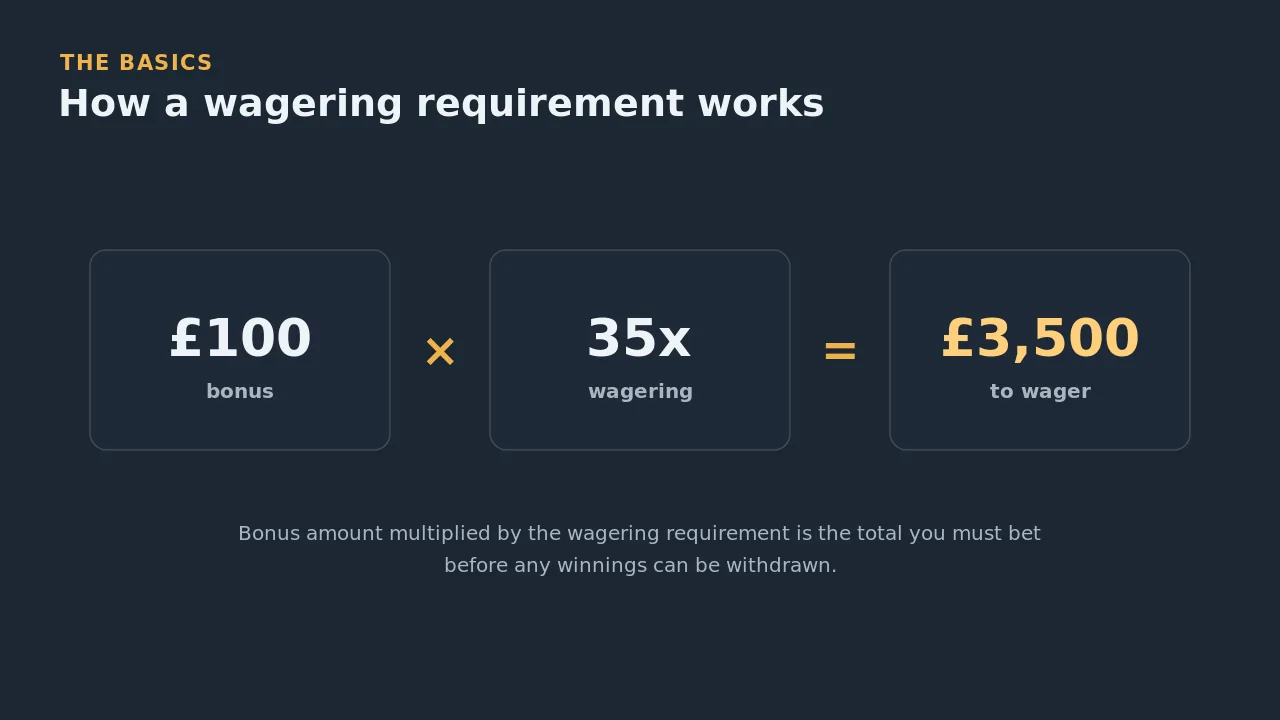
Britain has capped bonus wagering at 10x since 19 January 2026. How that rule works, what Denmark, Sweden and the Netherlands do, and the maths.
Read article →
The EU AI Act timeline shifted in July 2026, the Dutch regulator plans AI guidelines and UK rules already require automated harm checks. What it means.
Read article →
UK financial risk assessments will start at GBP 5,000 a day. How deposit limits, stake caps and credit bans compare in the Netherlands, Sweden and Finland.
Read article →This article is independent editorial coverage and is not sponsored; no operator or supplier paid for inclusion. The facts were checked against the sources listed above on 5 October 2026, and rules, programmes and offers can change after that date. Nothing here is legal or betting advice. 18+ only; if you gamble, set your limits in advance.