
Cashback and reload offers under the 2026 bonus rules: what changes for regular players



The rules that now decide what a casino can offer after sign-up come from regulators, not marketing departments. In Great Britain, the Gambling Commission's 10x wagering cap and ban on mixed-product promotions have applied to every incentive, not just welcome offers, since 19 January 2026. Sweden allows only one bonus per player, the Netherlands plans to ban bonuses, and Australia will restrict the direct marketing of wagering inducements from 1 January 2027.
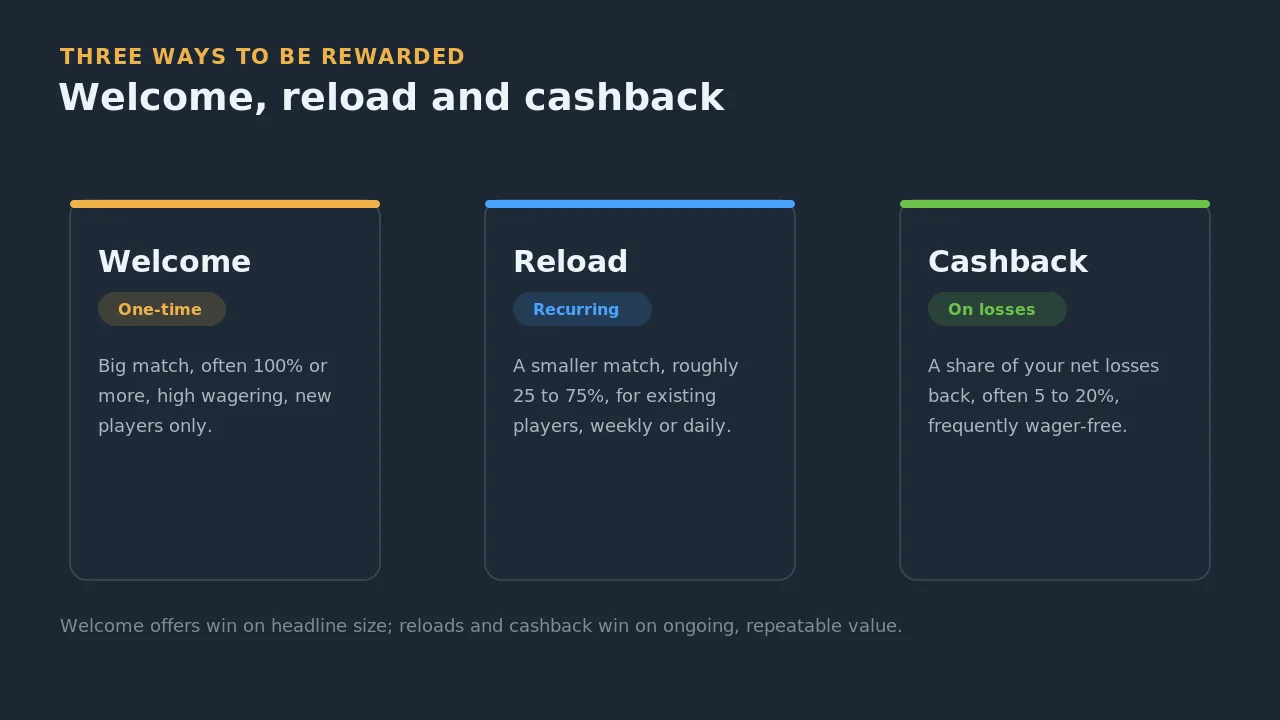
Cashback returns part of a player's losses; a reload bonus adds money to a later deposit; a welcome bonus is the one-off offer at sign-up. There is no reliable public data showing how operators split their promotional spending between these, so this piece does not claim a market-wide shift. What can be verified is how the rules treat each type, and those rules have changed a lot in 2025 and 2026.
Britain: one cap for every incentive
The Gambling Commission's changes to Social Responsibility code 5.1.1, announced on 26 March 2025, took effect on 19 January 2026 after the start date was moved from 19 December 2025. The licence text says operators must not apply wagering requirements, meaning play-through of bonus funds, over a maximum of 10 times. The rule is written about incentives generally, so a reload bonus or a cashback payment credited as bonus money is covered in the same way as a welcome bonus. Cashback paid as withdrawable cash carries no wagering at all.
The end of cross-product reloads
The second British change hits a common shape of ongoing offer: the reward that moves a player from one product to another, such as casino spins for placing a sports bet. An incentive may no longer include more than one type of gambling product, with betting, casino, bingo and lottery named as the categories. In a blog on 12 December 2025 the Commission said the ban does not apply where the customer can freely choose, on an unrestricted basis, which product to use the bonus on. It also said terms should be clear, easily accessible, fair and open.
Sweden: one bonus, ever
Sweden is the clearest case of a market where ongoing bonuses from licensed operators are ruled out. Under the Gaming Act (2018:1138), a licensee may offer or give a bonus only at the first occasion a player plays any of its games. Spelinspektionen's Q&A for operators defines a bonus broadly, as any economic incentive, discount, rebate or reward linked to play, and cites a court finding that VIP offers, deposit bonuses and loyalty programmes count. On that reading, weekly cashback and reloads are not available from Swedish licensees. On 30 April 2026 the regulator reprimanded Polar Limited for giving bonuses to Swedish customers on two occasions.
Denmark and the Netherlands
Denmark's Spillemyndigheden limits the value of a bonus to DKK 1,000, caps playthrough at 10 times, and requires it to be completed within 60 days. Its worked example counts deposit and bonus together, so the cap is not as light as the multiple suggests.
In the Netherlands, the cabinet announced on 12 June 2026 a plan to end online gambling advertising and bonus offers, giving free play credit on account opening as an example. The plan still has to be drafted into legislation by State Secretary Claudia van Bruggen, and the announcement did not set a start date.
Australia: inducement limits from 2027
Australia's picture is different because online casinos cannot legally be offered to people in Australia; the Interactive Gambling Act targets the providers of those services. Licensed sports and race wagering is the regulated product. Under the existing National Consumer Protection Framework, wagering providers cannot offer credit, vouchers or rewards as an incentive to open an account or refer someone else.
Parliament passed the Interactive Gambling Amendment (Gambling Reform) Bill 2026 on 19 August 2026, according to the ACMA. From 1 January 2027 it prohibits the direct marketing of inducements for 14 days after a customer signs up with a wagering company, for three months after someone leaves the BetStop self-exclusion register, and indefinitely for customers identified as at risk. The government says the same start date applies to new limits on wagering advertising, including during live sport.
| Market | Welcome bonus | Reloads and cashback |
|---|---|---|
| Great Britain | Allowed, if wagering stays at 10x or less and the offer covers one product | Allowed; same 10x cap if wagering applies; no cross-product rewards |
| Sweden | One bonus at the first occasion a player plays | Not allowed from licensees, as rebates and loyalty rewards count as bonuses |
| Denmark | Max DKK 1,000; playthrough max 10x within 60 days | Same limits apply to bonus offers |
| Netherlands | Planned ban announced 12 June 2026 | Planned ban; not yet law |
| Australia (wagering) | No incentives to open an account | From 1 January 2027, no direct marketing of inducements in the first 14 days or to at-risk customers |
How the cashback maths works
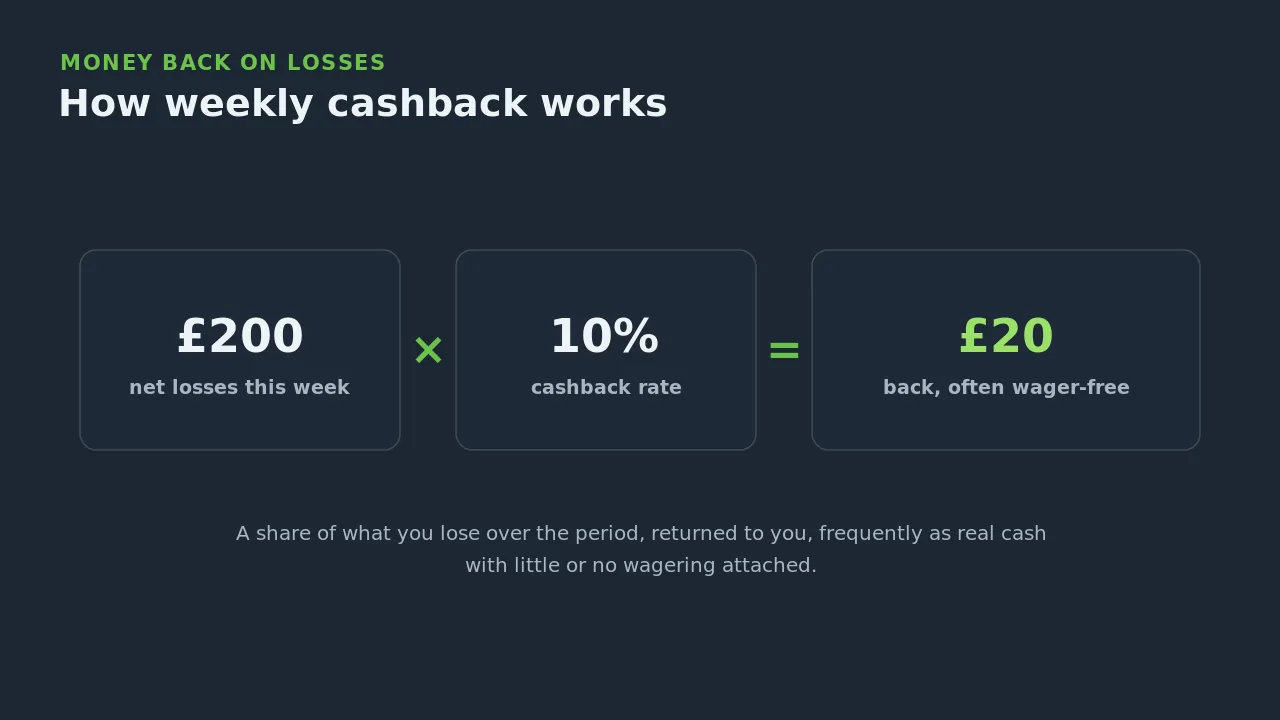
Cashback pays a percentage of net losses over a set period. With 10 percent weekly cashback and 200 pounds of net losses, 20 pounds comes back. Paid as cash, that is simply a 10 percent reduction in that week's loss. Paid as bonus money with, say, 10x wagering, the 20 pounds must be staked 200 pounds' worth; on a game with a 4 percent house edge that costs about 8 pounds on average, so the cashback is worth nearer 12 pounds. These are illustrative sums, not any operator's terms. Our cashback guide covers the terms to check.
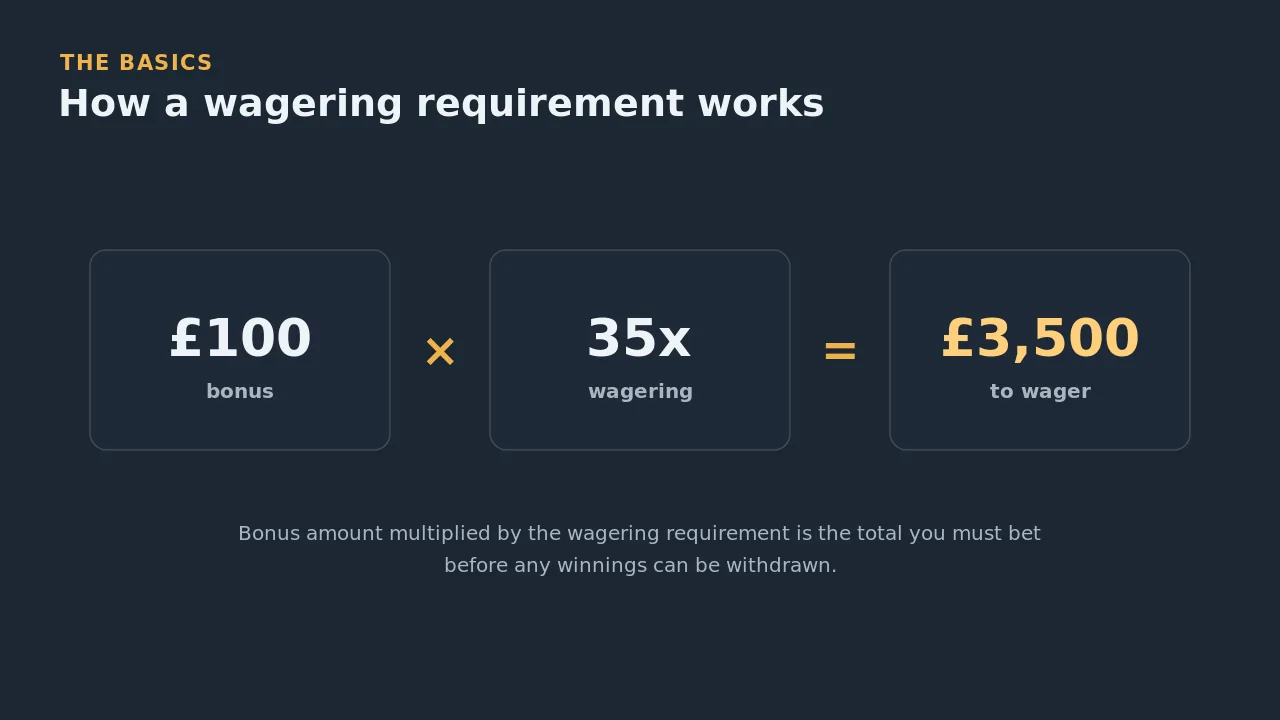
The same method compares a welcome bonus with ongoing offers. A 100 pound welcome bonus at the GB maximum of 10x means 1,000 pounds of turnover and, at a 4 percent edge, about 40 pounds of expected cost. Cashback only pays when a player loses, so it softens losses rather than changing the house edge. Our bonus calculator runs these sums for any offer.
What is confirmed and what is not yet known
- Confirmed: since 19 January 2026 every GB incentive has been limited to 10x wagering and to a single product; Sweden permits a bonus only at a player's first occasion; Australia's inducement limits start on 1 January 2027.
- Not yet known: when the Dutch bonus ban will take effect and whether it will cover ongoing offers as well as sign-up credit.
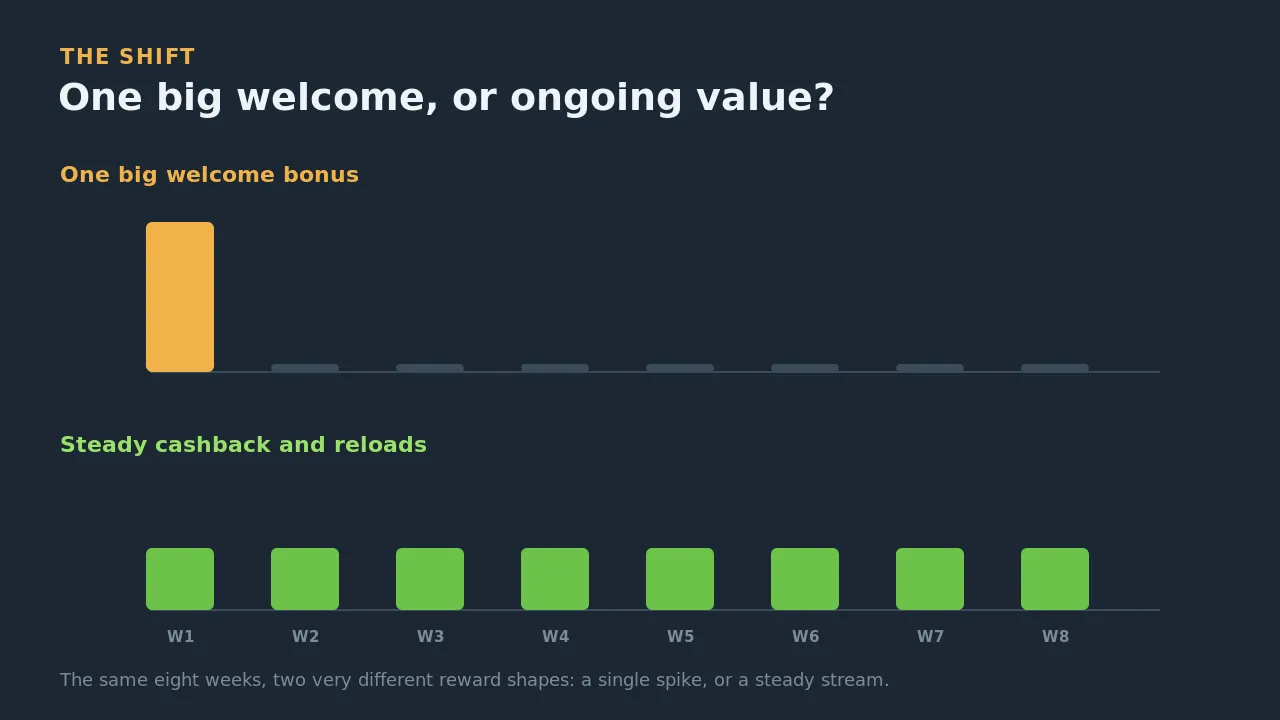
- Not claimed here: that operators are moving budgets from welcome bonuses to cashback. We found no public data to support that.
What it means for players
On a GB-licensed site, a reload or cashback offer should carry no more than 10x wagering and should not require you to switch products. Cash cashback is worth more than the same amount in bonus money. Offers that return part of your losses can make it easier to keep playing, so it is worth setting limits first; see our responsible gambling guide.
Frequently asked questions
Does the UK 10x wagering cap apply to reload bonuses?
Yes. The rule in SR code 5.1.1 covers wagering requirements on bonus funds in any incentive, so reloads and bonus-money cashback are included.
Is cashback paid in cash affected by the wagering cap?
Cash cashback has no wagering requirement, so the cap has nothing to limit. It is still an incentive and must follow the other rules, including the mixed-product ban.
Why can Swedish casinos not offer weekly cashback?
The Gaming Act allows a bonus only at the first occasion a player plays, and Spelinspektionen treats rebates and loyalty rewards as bonuses.
Will the Netherlands ban reload offers?
The cabinet announced a plan to ban bonuses on 12 June 2026, but the legislation has not been drafted, so its exact scope and start date are not known.
What changes in Australia on 1 January 2027?
Wagering companies may not send inducements by direct marketing in the first 14 days after sign-up, for three months after a BetStop exit, or to at-risk customers.
How do I compare cashback with a welcome bonus?
Work out the expected cost of any wagering, subtract it from the bonus, and remember cashback only pays after a loss.
Sources
- Gambling Commission - Gambling promotions to be safer and simpler (26 March 2025, updated 24 July 2025)
- Gambling Commission - LCCP condition 5.1.1 SR code
- Gambling Commission blog - Socially responsible incentives: what operators need to know (12 December 2025)
- Spelinspektionen - Fragor och svar for aktorer
- Spelinspektionen - Polar Limited reprimand (30 April 2026)
- Spillemyndigheden - Marketing of gambling
- Rijksoverheid - Kabinet scherpt beleid online kansspelen flink aan (12 June 2026)
- ACMA - About the Interactive Gambling Act
- Tasmanian Department of Treasury and Finance - National Consumer Protection Framework
- Gaming Intelligence - Australian Parliament passes Interactive Gambling Amendment Bill (20 August 2026)
- Yogonet - Australia tightens gambling advertising rules under new reform bill (21 August 2026)
- Department of Infrastructure, Transport, Regional Development, Communications, Sport and the Arts - Gambling reforms 2026
Go deeper
Britain has capped bonus wagering at 10x since 19 January 2026. How that rule works, what Denmark, Sweden and the Netherlands do, and the maths.
Read article →
What the UK 10x wagering cap, ASA ad rules and bans or limits in the Netherlands, Sweden, Italy and Australia mean for no-deposit offers in 2026.
Read article →
How to keep any promotion, cashback included, from nudging you past your budget.
Read guide →This article is independent editorial coverage and is not sponsored; no operator or supplier paid for inclusion. The facts were checked against the sources listed above on 24 September 2026, and rules, programmes and offers can change after that date. Nothing here is legal or betting advice. 18+ only; if you gamble, set your limits in advance.