
The Dutch regulator wants a "white list" so Google can shut out illegal gambling ads



The Dutch gambling regulator, the Kansspelautoriteit (Ksa), is working with Google on a "white list" of every licensed gambling operator in the European Union, so that any advertiser not on it can be refused. Chairman Michel Groothuizen described the plan on 14 October 2026, five years after the Netherlands opened its licensed online market. About 90% of Dutch online players gamble only with licensed sites, he wrote, yet for every euro staked legally another euro still goes to the illegal circuit. The question his column answers is why the regulator is negotiating with the largest platforms before taking them to court.
What the Ksa chairman wrote
The piece, published on the Ksa's website, is a column rather than a formal decision, and it starts with a confession of limits. Fining illegal operators, Groothuizen wrote, sends a clear signal about what is and is not allowed but achieves little when it comes to collecting the money. For the past eighteen months the Ksa has therefore run a second track: making illegal sites harder to find, and stopping payments to and through them. "We are not there yet, but the direction is clear," he wrote.
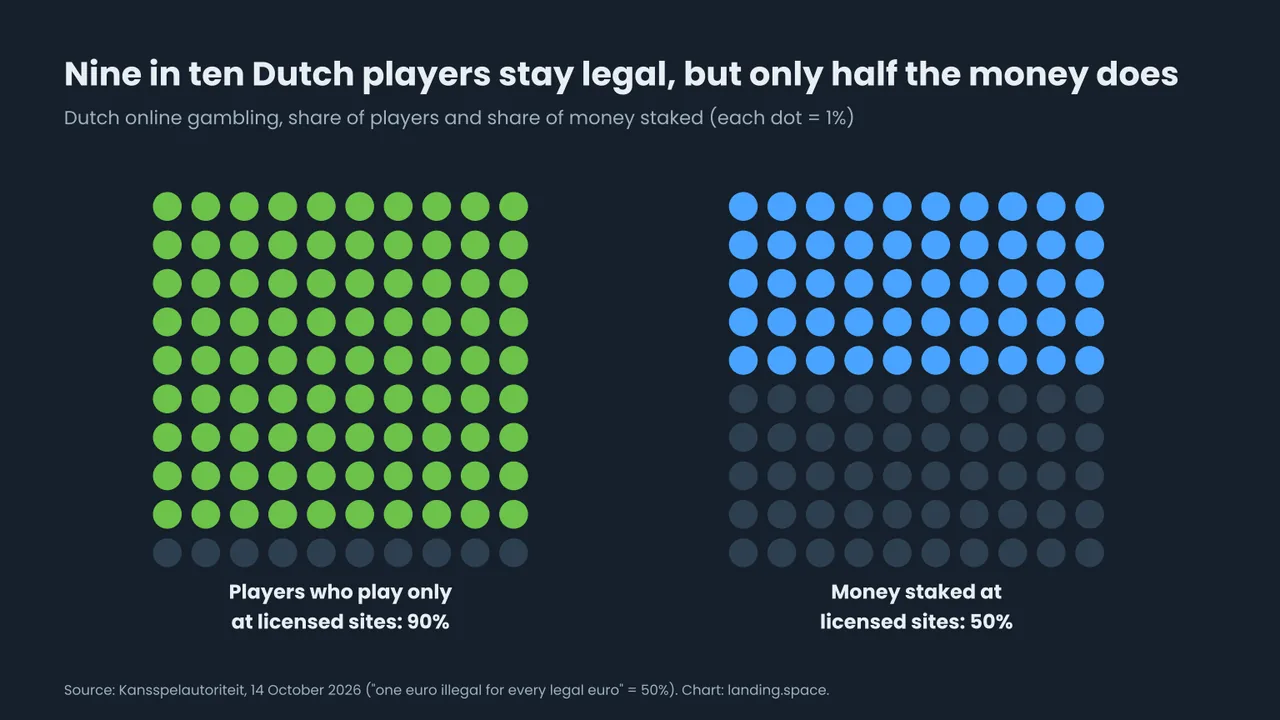
The gap between those two numbers is the regulator's problem in one picture. A minority of players, betting large sums, keeps half of the money outside the licensed system, where no Dutch rules on limits, advertising or self-exclusion apply.
Why the regulator is not suing yet
Groothuizen does not dispute that there is a case. Adverts for illegal gambling aimed at people in European exclusion registers, or at children, are easy to find and run "into the thousands, if not hundreds of thousands", he wrote, and both Dutch law and the EU Digital Services Act offer grounds to act, although under the DSA it is the European Commission that decides. His argument is about timing and risk: an opponent with almost unlimited resources would contest every piece of evidence, a final judgment could take five years, and a lost case would leave the regulator worse off than one never started. The column ends with a warning: if agreements with the platforms deliver too little, the Ksa "will not hesitate" to take one of them on.
The white list
The core of the plan came out of talks held last spring in Dublin, where Google and Meta have their European headquarters, between the two companies and several European gambling regulators. According to the column:
- there is now a joint task force, which is working among other things on a white list of all legal gambling operators in the EU, drawn up together with Google;
- every operator not on that list would by definition be in breach and could be kept off Google's advertising;
- the Ksa hopes this closes "a main tap", but expects there are more to find, and says the big platforms are not permanent allies, because their interests often run against what the regulator wants.
Some trade reports described the plan as a joint deal with Google and Meta. The column names Google for the list; Meta is at the table in the task force, but no specific Meta commitment is described. No launch date is given.
Parliament and the licensed industry want more
The column is partly a reply to pressure. In the September committee debate on gambling, VVD member Bart Bikkers called for the Ksa to fine the very large platforms, and the licensed operators have already gone to court.
| Date | Who | What | Source |
|---|---|---|---|
| 13 August 2026 | BNR radio | Found adverts on Facebook and Instagram pitching sites "zonder Cruks", without the national self-exclusion register; Meta removed many after questions | NOS (press) |
| 28 September 2026 | VNLOK, the licensed operators' association | Summoned Meta before the Amsterdam District Court, asking it to find Meta in breach of its DSA obligations | Gaming.net (press) |
| September 2026 | Tweede Kamer | Adopted a motion asking the government to allow fines for platforms that keep showing illegal gambling ads after a removal request | Female-Gamers (press) |
| 14 October 2026 | Ksa | Column: talks and a white list first, legal action kept in reserve | Ksa |
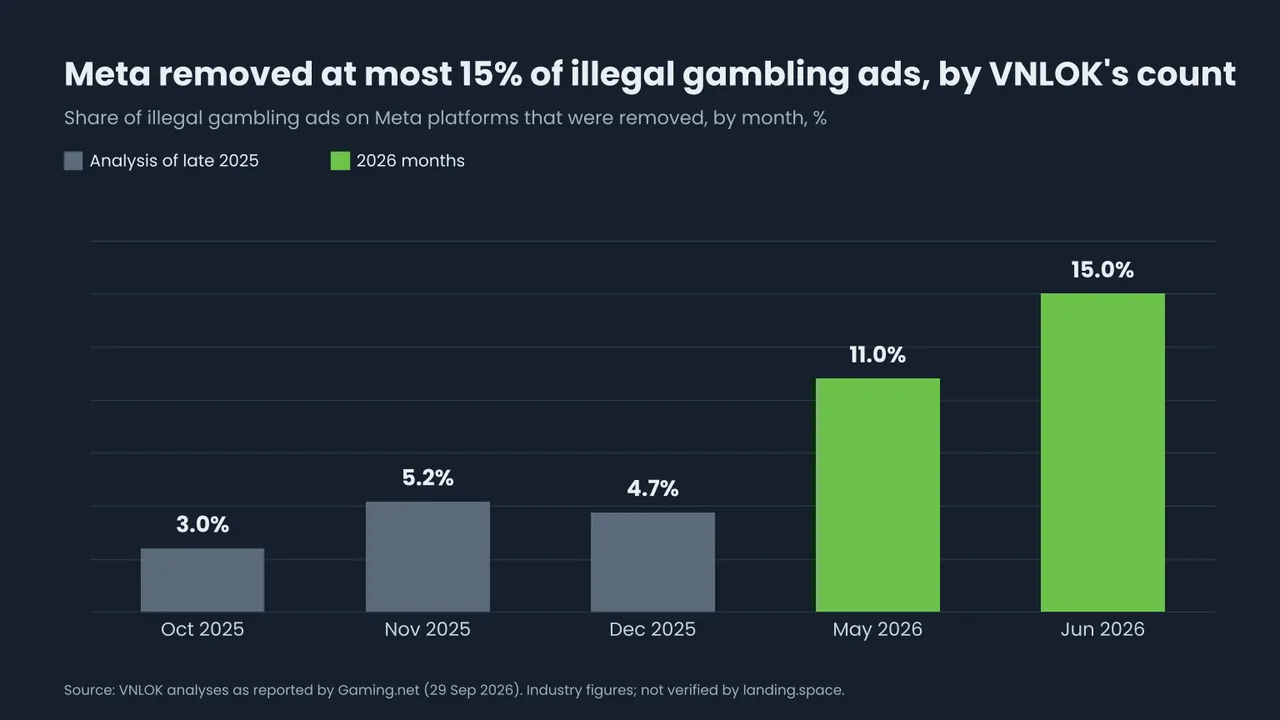
VNLOK's own analysis, as reported, found that more than 95% of gambling promotion on Meta's platforms in late 2025 came from illegal providers, and that Meta removed 11% of the illegal ads in May 2026 and 15% in June. Those are the association's figures; we have not seen Meta's reply to the lawsuit. When BNR asked in August, Meta said it takes enforcement seriously and that advertisers must follow the law.
The adverts BNR found in August show why the regulator talks about vulnerable groups. Searching Facebook for "zonder Cruks" or "geen Cruks" brought up adverts that presented the self-exclusion register as a restriction and pointed to unlicensed sites with large bonuses; they ran from accounts with names such as "Zonder Cruks" and "Betrouwbare Spelsites", which Meta took offline after the broadcaster's questions. VNLOK and the Keurmerk Verantwoorde Affiliates estimated that Meta earns at least EUR 10 million a year from illegal gambling adverts aimed at the Netherlands; Meta did not give a figure.
The smaller fixes that already work
A week before the column, the Ksa reported a quicker win against a different trick: copies of licensed sites on .co.nl addresses, which look like the real .nl domain and send visitors on to an illegal casino. After the regulator alerted the operator of the .co.nl extension, 26 such clone sites went offline within at most 48 hours, almost all of them copies of licensed operators' sites. In the same investigation it found other illegal sites on the extension, and 86 had been reported and removed so far. It is the kind of cooperation the column describes: a gatekeeper that can switch off many sites at once, without a five-year lawsuit.
The same weeks brought smaller steps inside the licensed market. On 8 October the Ksa published guidance on verifying players' bank accounts and other payment methods, after finding that operators did not always run those checks properly, and in September it set out that players must always be able to close their accounts. Neither is aimed at Big Tech, but both tighten the rules that make a licensed site different from an illegal one.
What is confirmed and what is not yet known
- Confirmed: the Ksa chairman says a task force with Google is building an EU-wide white list of legal operators; talks with Google and Meta took place in Dublin in spring 2026; the Ksa holds legal action in reserve; 26 .co.nl clone sites were taken down within 48 hours and 86 sites removed in total.
- Not yet known: when the white list will be used and in which countries; whether Meta will join it; when VNLOK's case against Meta will be heard; whether the government will turn the parliamentary motion into law.
What it means for players
If you see a gambling advert in the Netherlands that promises play without Cruks, the national self-exclusion register, it comes from an operator without a Dutch licence: licensed sites must check Cruks. The same caution applies to a familiar casino name on an unfamiliar address such as .co.nl. Our guide to what a licence covers explains what you lose on an unlicensed site, and the responsible gambling guide lists the self-exclusion and support options that only licensed operators are bound to respect.
Frequently asked questions
What is the Ksa's white list?
According to the Ksa chairman's column of 14 October 2026, it is a list of all legal gambling operators in the EU that a task force is drawing up together with Google, so that operators not on it can be refused as advertisers.
Is Meta part of the plan?
Meta took part in the talks in Dublin and sits in the joint task force, according to the column, but the white list is described as a project with Google. No specific commitment from Meta is described.
Why does the Ksa not fine Google or Meta?
Its chairman wrote that the regulator has grounds under Dutch law and the Digital Services Act, but that a case against a platform could take five years and a lost case would be worse than none. Legal action stays open if talks deliver too little.
Who is suing Meta in the Netherlands?
VNLOK, the association of licensed online operators, summoned Meta before the Amsterdam District Court, as announced on 28 September 2026, asking it to find that Meta does not meet its obligations under the Digital Services Act.
Are adverts for casinos without Cruks legal?
No. Licensed Dutch operators must check the Cruks self-exclusion register, so an advert that promises play without Cruks comes from an operator without a Dutch licence. BNR found such adverts on Facebook and Instagram in August 2026.
How big is the illegal market in the Netherlands?
The Ksa says about 90% of Dutch online gamblers play only with licensed operators, but in money terms one euro goes to the illegal circuit for every euro staked legally.
Sources
- Kansspelautoriteit - Verleiden of vechten? Of allebei? (column by Michel Groothuizen, 14 Oct 2026)
- Kansspelautoriteit - Succesvolle aanpak gekloonde websites door Ksa (7 Oct 2026)
- Gaming.net (press) - VNLOK serves Meta with court summons over illegal gambling ads (29 Sep 2026)
- NOS (press) - BNR: illegale gokreclames op platforms Meta gericht op kwetsbare gokkers (13 Aug 2026)
- Female-Gamers (press) - Illegale gokadvertenties op Meta: VNLOK naar rechter (5 Oct 2026)
- iGamingToday (press) - Dutch regulator teams up with Google and Meta (15 Oct 2026)
- Kansspelautoriteit - news (guidance on bank account verification, 8 Oct 2026; account closure, 23 Sep 2026)
Go deeper
Australia passed wagering ad limits that start on 1 January 2027. How the rules compare in the UK, Ireland, the Netherlands, Germany and Italy.
Read article →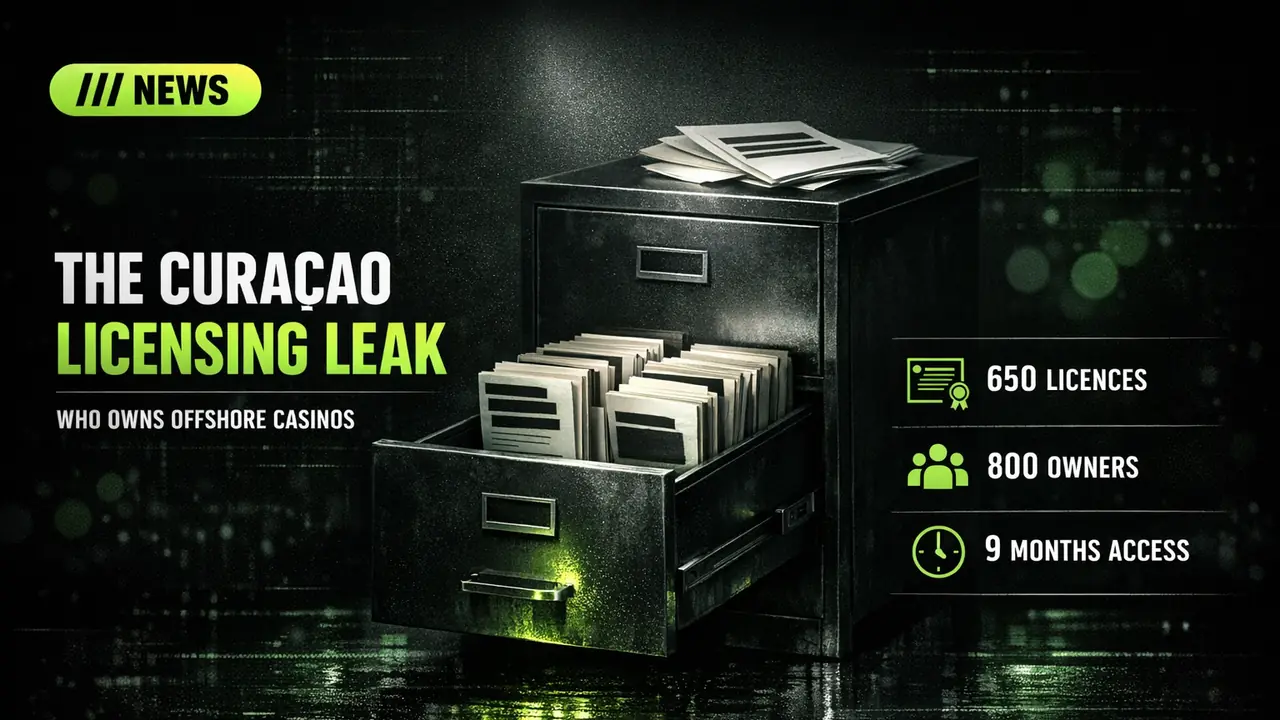
Nine months inside Curaçao's licensing portal: the brands the reporters name, the regulator's reply, a UK supplier's contract and what stays unproven.
Read article →
What a gambling licence covers, and what it does not.
Read guide →This article is independent editorial coverage and is not sponsored; no operator or supplier paid for inclusion. The facts were checked against the sources listed above on 15 October 2026, and rules, programmes and offers can change after that date. Nothing here is legal or betting advice. 18+ only; if you gamble, set your limits in advance.