
Flutter plans up to 1,400 job cuts in the UK and Ireland, blaming the tax rises



Flutter Entertainment, the owner of Paddy Power, Sky Bet and Betfair, said on 20 October 2026 that it plans to cut up to 1,400 jobs in its UK and Ireland business, subject to consultation. The company ties the restructure directly to the gambling duty rises announced in the November 2025 Budget, above all the rise in online casino duty from 21% to 40% this April. It comes eight days before Chancellor John Healey's first Budget, where a higher tax on gaming machines is being argued over.
What Flutter announced
The plan covers Flutter's UK and Ireland division, which the company calls UKI. Up to 1,400 roles could go, and the company says the number is subject to consultation with staff. The people affected work in Leeds and Dublin, and in UK and Ireland teams based at Flutter's hubs in Porto, Portugal, and Cluj-Napoca, Romania. Flutter employs about 9,000 people in the UK and Ireland out of 28,500 worldwide, so the plan would reach up to roughly one in six of the division's staff.
Carrying out the restructure will cost $80m to $90m, to be incurred in the fourth quarter of 2026. That money is already inside the guidance Flutter gave investors with its second-quarter results, when it raised its expected restructuring, transaction and integration costs to $500m. Kevin Harrington, chief executive of the UK and Ireland business, said the company "cannot fully absorb a rise of this magnitude without reducing our fixed cost base".
The duty rises behind the cuts
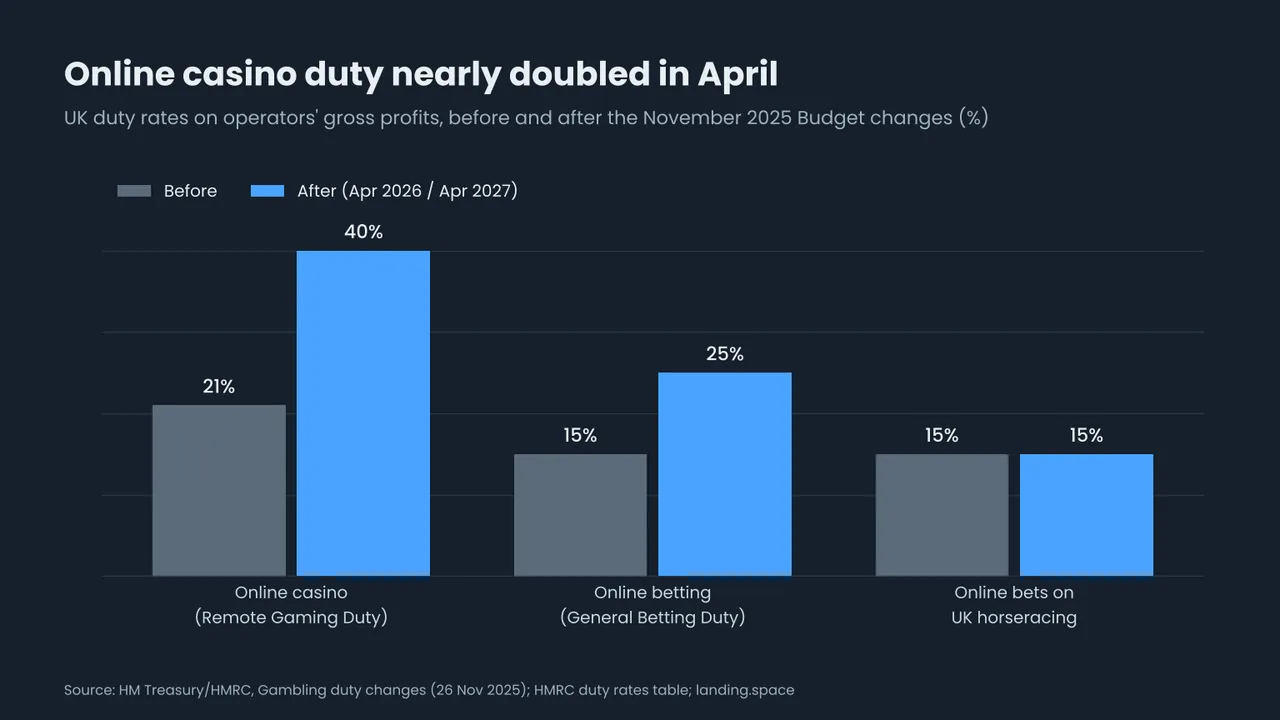
The restructure is not a reaction to next week's Budget. It answers the changes announced by the previous Chancellor, Rachel Reeves, in November 2025. Britain taxes gambling operators on gross profit, the money staked minus the winnings paid out (our guide to how casinos make money explains the term), and the online rates moved sharply. Remote Gaming Duty, which covers online casino games and slots, went from 21% to 40% on 1 April 2026. General Betting Duty on most online bets rises from 15% to 25% on 1 April 2027, while online bets on UK horseracing stay at 15%. Flutter's release gives the same figures: 19 percentage points on online gaming, 10 on sports betting outside horseracing.
Flutter had already told investors what the rises would cost it. Under its previous guidance, the UK tax changes take $540m off its adjusted earnings (EBITDA) in 2027, and it expects to offset $201m of that through what it calls first-order mitigation, the cost measures this restructure belongs to. On those figures, its own cost cuts cover about 37% of the 2027 hit. Flutter also expects what it calls second-order benefits: as the largest operator in the UK, it says protecting its investment in its products should help it win market share while the higher taxes weigh on the wider market.
What the Treasury expected, and what came in
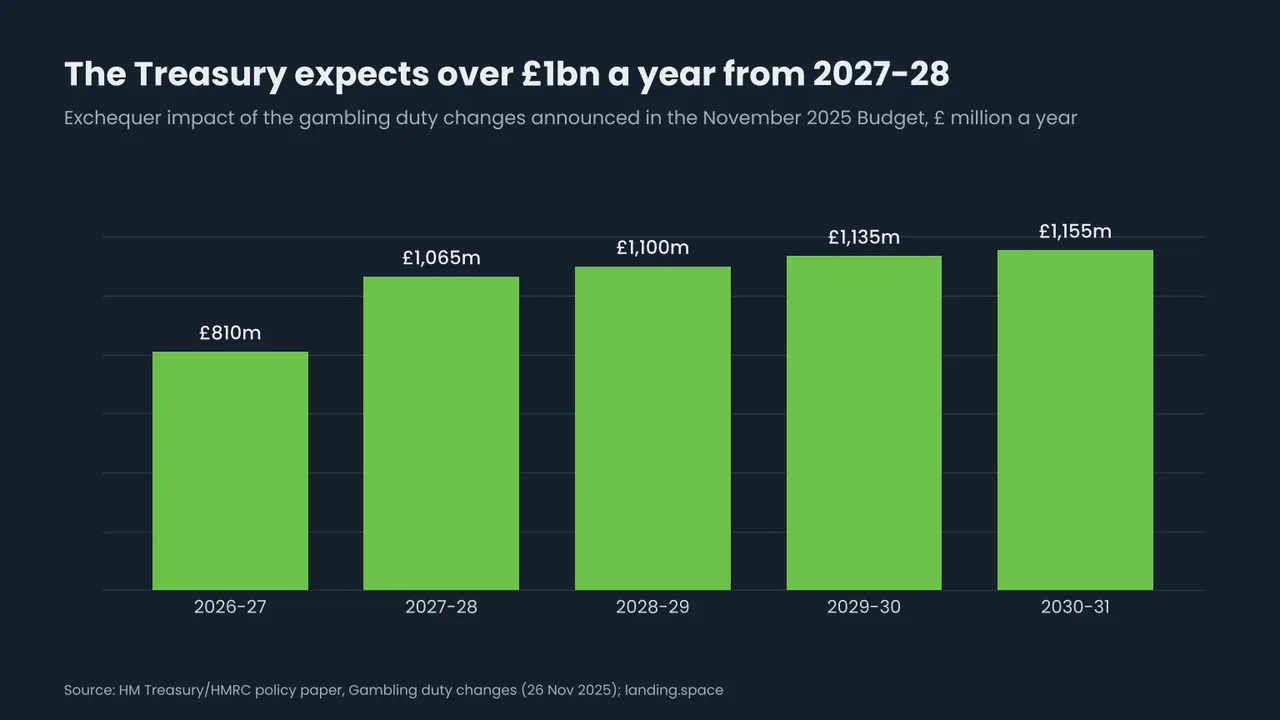
When the rises were announced, the Treasury costed them at £810m in 2026-27, climbing above £1bn a year from 2027-28, once the betting change applies too, and to £1,155m by 2030-31. These are the government's estimates, made before the new rates took effect.
The first hard figure arrived on 30 September. HMRC received £589.7m of Remote Gaming Duty in July 2026, the first payment for a quarter taxed entirely at 40%, against £283.0m in July 2025: 2.08 times as much, while the rate rose 1.9 times. As we set out in our article on Machine Games Duty and the Budget, dividing each payment by its rate suggests the profit being taxed was about 9% higher than a year earlier. That is one provisional quarter, and it says nothing about individual companies. More money for the Treasury and job cuts at the largest operator can both be true, because the duty comes out of the operator's margin.
A week before the Budget, the fight is over machines
Flutter's news landed in the middle of a separate argument. Reports say the Treasury is considering whether to raise Machine Games Duty, charged on machines in venues such as bookmakers and arcades, on 28 October. On 16 October, 90 Labour MPs signed a letter led by Alex Ballinger asking the Chancellor to raise the duty on Category B machines to 40%, double today's standard rate. Their plan leaves pub fruit machines out and keeps bingo games duty-free, and it relies on the Social Market Foundation's estimate that the change would raise £275m to £458m a year.
The industry's trade body, the Betting and Gaming Council, replied three days later. Its chief executive Grainne Hurst said MPs were right to worry about high streets, but called it "deeply misguided" to think higher taxes on betting shops and casinos would help them. The industry body says more than 600 betting shops have closed or announced closures since last year's Budget, and cites EY modelling that a 40% rate would close about 1,500 more shops and 34 casinos, put up to 16,000 jobs at risk and leave the Treasury up to £124m worse off. Flutter is not the first big operator to cut UK staff over tax: Entain, the Ladbrokes owner, announced up to 400 customer-care job cuts in September.
| Date | Who | What |
|---|---|---|
| 16 Sep 2026 | Entain | Up to 400 UK customer-care roles cut, citing the tax burden |
| 16 Oct 2026 | 90 Labour MPs | Letter asking for 40% duty on Category B machines |
| 19 Oct 2026 | Betting and Gaming Council | Calls the MPs' proposal deeply misguided; cites EY job and shop estimates |
| 20 Oct 2026 | Flutter | Up to 1,400 UK and Ireland redundancies, subject to consultation |
| 28 Oct 2026 | HM Treasury | Budget day: any change to Machine Games Duty would be announced here |
Why Dublin is on the list
The duty rises are British, but the cuts are not confined to Britain. Flutter runs the two markets as one division, and its release names Dublin next to Leeds. Ireland's Budget 2027 on 6 October kept Irish betting duty at 2%, the Racing Post reported, and operators there still do not know how much the new social impact fund levy, due from 2027 and set by Ireland's gambling regulator, will cost them. Flutter has not said how the 1,400 roles divide between the four locations.
What is settled and what is open
- Confirmed: up to 1,400 redundancies proposed at Flutter UK and Ireland, subject to consultation; Leeds, Dublin, Porto and Cluj-Napoca named; $80m to $90m of costs in the fourth quarter of 2026.
- Confirmed: the online casino rate of 40% has applied since April 2026 and the online betting rate of 25% applies from April 2027; Budget day is 28 October 2026.
- Not known: how many roles go in each location, which teams are affected and when the consultation ends.
- Not known: whether the Budget changes Machine Games Duty or any of the online rates.
- Claimed, not shown: Flutter's view that the duty rises may be feeding the unlicensed market. The release does not put a number on it.
What changes for customers
Customers of Paddy Power, Sky Bet, Betfair and Flutter's other UK and Irish brands do not pay these duties directly. Under the Gambling Commission's guidance, UK customers pay no tax on what they win, however large the win, and the release is about staff, not about customer accounts, products or brands. Harrington argued that the rises have changed the economics of the regulated UK market and may be pushing players towards unlicensed sites; that is the company's assessment. This article will be updated after the Budget on 28 October and once Flutter reports how the consultation ended.
Frequently asked questions
How many jobs is Flutter cutting in the UK and Ireland?
Up to 1,400, subject to consultation, Flutter said on 20 October 2026. The roles are in Leeds and Dublin and in UK and Ireland teams at its hubs in Porto and Cluj-Napoca. The division employs about 9,000 people.
Why is Flutter cutting jobs?
It says the restructure responds to the gambling duty rises announced in the November 2025 Budget, above all Remote Gaming Duty going from 21% to 40% in April 2026. The cuts are part of cost measures it had already promised investors.
Does this change anything for Paddy Power, Sky Bet or Betfair customers?
The announcement is about staff. It does not mention changes to customer accounts, products or brands. Paddy Power, Sky Bet and Betfair are among Flutter's UK and Irish brands.
Is the 28 October Budget behind the cuts?
No. Flutter is responding to rises announced in November 2025. The 28 October Budget may bring a separate change to Machine Games Duty on gaming machines in venues, which 90 Labour MPs have asked for and the Betting and Gaming Council opposes.
How much did the Treasury expect the higher gambling duties to raise?
£810m in 2026-27 and over £1bn a year from 2027-28, reaching £1,155m in 2030-31, according to its November 2025 costing.
Are gambling winnings taxed in the UK?
No. Under the Gambling Commission's guidance, a UK customer keeps any gambling win without paying tax on it, however large. The duties fall on operators and are charged on their gross profit.
Sources
- Flutter Entertainment - Flutter announces restructure of UKI business (20 October 2026)
- HM Treasury - Gambling duty changes, policy paper (26 November 2025)
- HMRC - Historical UK betting and gaming duty rates (updated 30 September 2026)
- HMRC - UK Betting and Gaming Statistics, tables to July 2026 (30 September 2026)
- HM Treasury - Chancellor's letter to the Treasury Select Committee on the Budget 2026 date (31 July 2026)
- gov.uk - Chancellor of the Exchequer (read 7 October 2026)
- Gambling Commission - Winnings from gambling for customers (12 May 2026)
- SBC News - 90 Labour MPs publicly demand Machine Games Duty rise (16 October 2026)
- SBC News - BGC response to the MPs' letter on Machine Games Duty (19 October 2026)
- SBC News - Entain job cuts and letter to the Prime Minister (16 September 2026)
- Racing Post - No increase in betting tax in the Irish Budget (6 October 2026)
Go deeper
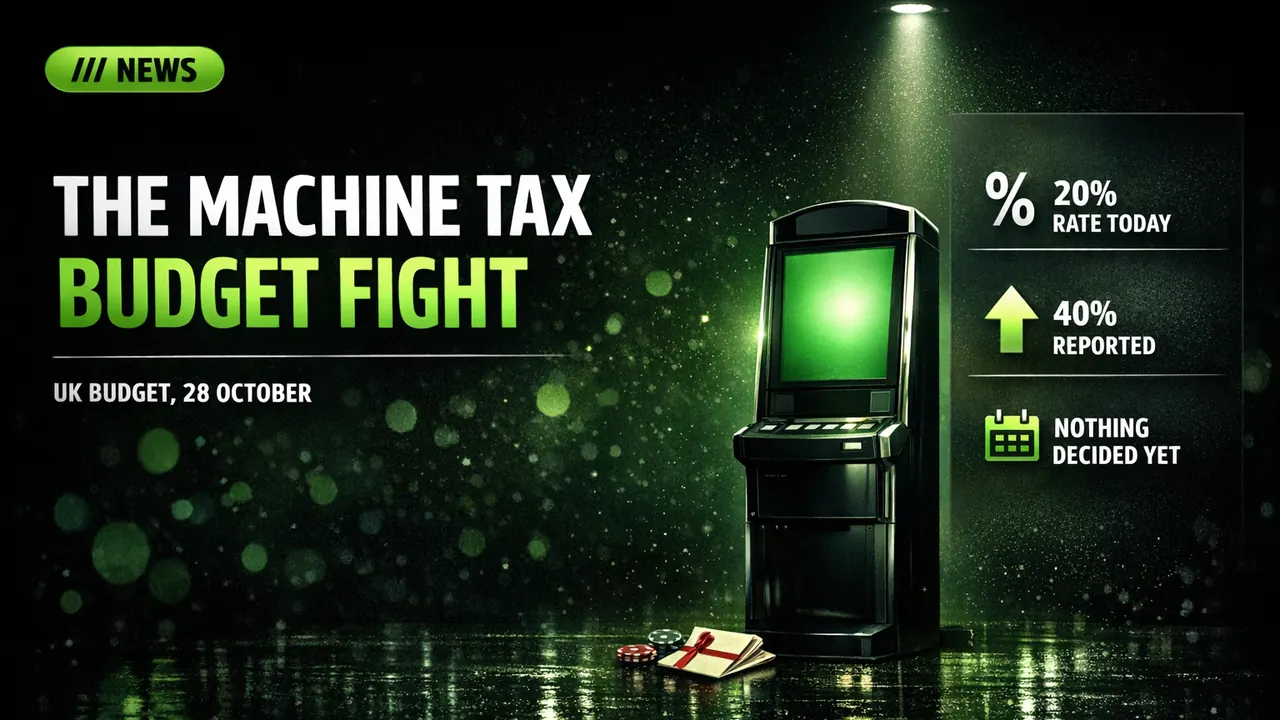
The Treasury is reported to be weighing a higher tax on gaming machines before the 28 October Budget. What is proposed, who objects and what the figures show.
Read article →
UK financial risk assessments will start at GBP 5,000 a day. How deposit limits, stake caps and credit bans compare in the Netherlands, Sweden and Finland.
Read article →
Limits, time-outs, self-exclusion and where to get help.
Read guide →This article is independent editorial coverage and is not sponsored; no operator or supplier paid for inclusion. The facts were checked against the sources listed above on 21 October 2026, and rules, programmes and offers can change after that date. Nothing here is legal or betting advice. 18+ only; if you gamble, set your limits in advance.